
 3 hours ago
38
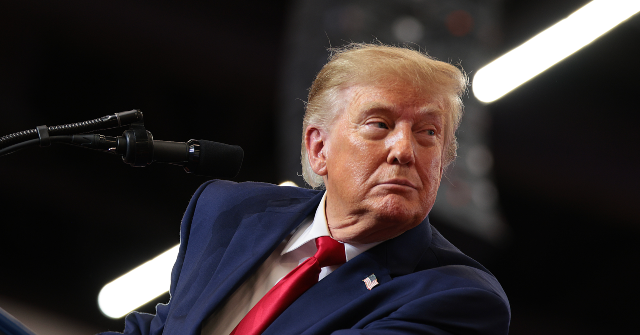
President Donald Trump scored another legal victory Saturday, this time in a case involving his removal of a member of the National Transportation Safety Board (NTSB). And while the ruling itself may not come as a huge surprise, there's an interesting constitutional wrinkle tucked into the decision.
U.S. District Judge Dabney Friedrich dismissed a lawsuit brought by Alvin Brown, a Biden appointee who was fired from the NTSB in 2025, before his five-year term expired.
Brown challenged his removal on two grounds: First, he argued that Trump violated federal law by firing him without cause. Second, he alleged that the decision was racially motivated.
Friedrich rejected both arguments.
The President's Power to Fire
Here's where things get interesting. Federal law expressly limits the president's authority to remove NTSB members, permitting dismissal only for inefficiency, neglect of duty, or misconduct. And Friedrich acknowledged that Trump violated that statutory restriction.
But that doesn't mean the firing was unlawful. The problem for Brown is the Supreme Court's June 2026 decision in Trump v. Slaughter, which held that Congress cannot prevent the president from removing Federal Trade Commission members who exercise executive authority.
Friedrich found that the same reasoning applies to the NTSB. Although the agency is designated as "independent," its members perform executive functions, including investigating transportation accidents, coordinating disaster responses, assisting law enforcement, and issuing binding regulations.
That makes them subject to presidential removal, regardless of what Congress says about requiring cause. In other words, the statutory protection exists on the books, but it cannot override the Constitution.
What About the Racial Discrimination Allegation?
Brown, the NTSB's only black member, also claimed his removal was discriminatory. He pointed to statistics suggesting Trump had fired black officials at disproportionately higher rates than white officials, along with the administration's vocal opposition to diversity, equity, and inclusion (DEI) policies.
But Friedrich wasn't persuaded. She explained that statistical disparities alone don't establish racial discrimination, particularly when the comparisons fail to account for other factors, such as political affiliation, policy views, qualifications, or which president appointed the officials.
And opposition to DEI policies isn't necessarily evidence of racial animus. As Friedrich observed, "Firing people because of their policy views is not tantamount to firing them because of their race."
One Question Left Unanswered
There's another intriguing aspect to this ruling, found in a footnote near the very end.
The Trump administration argued that the Fifth Amendment doesn't constrain the president's removal authority at all — meaning, under its theory, a president could fire an official for openly discriminatory reasons without violating that constitutional provision.
Friedrich declined to address that sweeping proposition because Brown hadn't adequately alleged discrimination in the first place.
So, the administration wins, Brown's lawsuit is dismissed, and the Supreme Court's presidential-removal precedent claims another application.
But that broader constitutional question remains very much unresolved.








 English (US) ·